


I Celebrate Myself - The Somewhat Private Life Of Allen Ginsberg
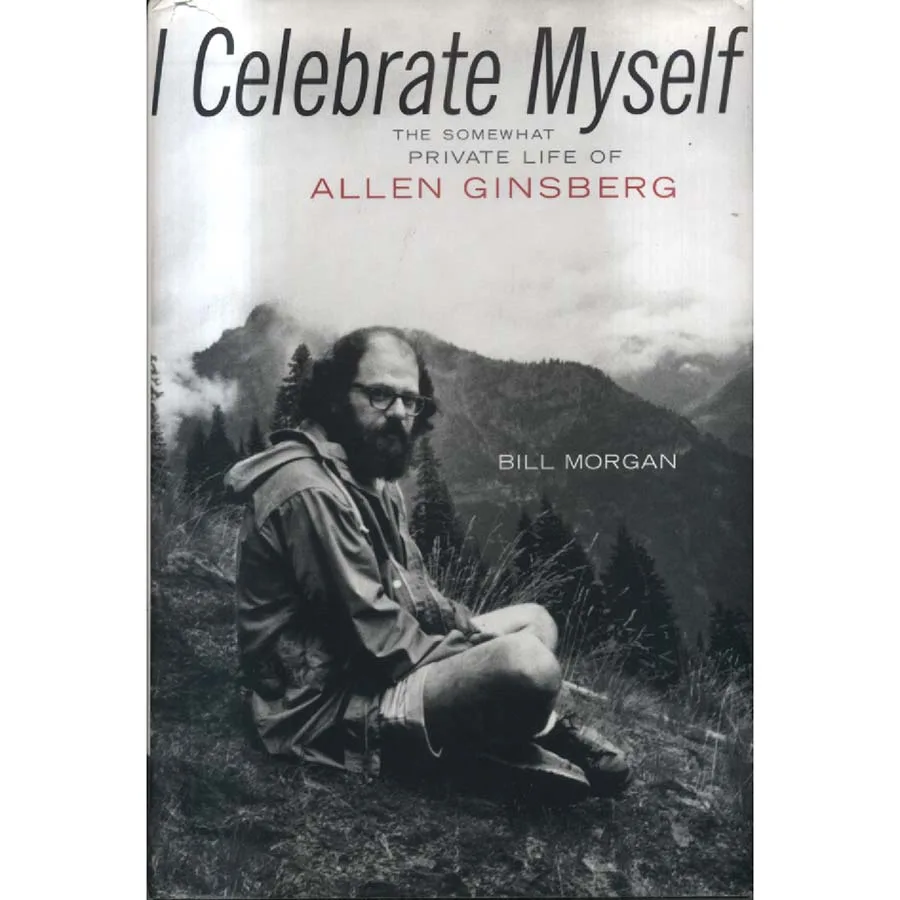
Publisher: Viking
Format: Hardback
ISBN: 9780670037964
I Celebrate Myself: The Somewhat Private Life of Allen Ginsberg (2006) – Bill Morgan
Viking | ISBN: 9780670037964
Condition: Good | Sold by Crappy Old Books
Allen Ginsberg. Poet, revolutionary, Buddhist, countercultural icon and a man who apparently regarded the entire concept of conventional respectability as an unfortunate misunderstanding. While most people spend their lives attempting to conceal their personal peculiarities, Ginsberg made a distinguished literary career out of announcing his to the world, preferably at considerable volume and in the company of other individuals whose behaviour would have horrified the average suburban dinner party.
Welcome to I Celebrate Myself: The Somewhat Private Life of Allen Ginsberg, Bill Morgan’s substantial and revealing biography of one of the twentieth century’s most influential, controversial and gloriously unconventional literary figures.
Born in 1926, Ginsberg emerged as a central figure in the Beat Generation, that remarkable collection of writers, poets and assorted cultural troublemakers who decided that post-war America was suffering from an excess of conformity, materialism and people wearing respectable suits while pretending to be happy.
Alongside Jack Kerouac, William S. Burroughs and other literary rebels, Ginsberg helped challenge traditional attitudes towards poetry, sexuality, spirituality and personal freedom. His groundbreaking poem Howl, first published in 1956, became a defining work of American counterculture and the subject of a celebrated obscenity trial, demonstrating that nothing attracts public attention quite like the authorities announcing that something is too shocking for respectable citizens to read.
Naturally, everybody immediately wanted a copy.
But Ginsberg’s life was considerably more complicated than a succession of literary scandals and enthusiastic performances before audiences of unconventional young people.
Morgan, who knew Ginsberg and worked as his archivist and bibliographer, draws upon an extraordinary wealth of personal and documentary material to examine the relationships, anxieties, ambitions and contradictions behind the public personality.
The biography explores Ginsberg’s family background, his relationship with his mother Naomi, his friendships with fellow Beat writers and his enduring emotional connection with poet Peter Orlovsky. It also follows his growing involvement in Buddhism, political activism and the cultural upheavals of the 1960s.
Ginsberg became an outspoken opponent of the Vietnam War, a campaigner for personal freedoms and an enthusiastic participant in an extraordinary assortment of demonstrations, gatherings and artistic experiments.
His conviction that poetry could challenge political authority was admirable, although one suspects the average government official was not entirely prepared for the prospect of being confronted by a bearded poet chanting in the street.
Morgan’s portrait reveals a man of remarkable generosity, intellectual curiosity and creative energy, but also considerable personal complexity. Behind the celebrated public figure stood an individual navigating difficult relationships, artistic rivalries, emotional insecurities and the practical complications of becoming an internationally recognised symbol of rebellion.
Published in 2006 by Viking, this biography offers a fascinating account of literary history, American counterculture and the extraordinary personalities who helped reshape twentieth-century artistic expression.
This 2006 Viking edition, offered in Good condition by Crappy Old Books, is an excellent acquisition for enthusiasts of Beat literature, American poetry, cultural history and the gloriously unpredictable lives of writers who refused to behave themselves.
A revealing journey through poetry, politics, sexuality, spirituality and the remarkable career of a man who transformed personal expression into a form of cultural revolution.
Because while most people spend their lives worrying about what the neighbours might think, Allen Ginsberg seemed considerably more interested in giving the neighbours something worth worrying about.
And preferably turning the resulting complaints into poetry.
Keep browsing: See more Biography books Other books by Bill Morgan
